Build Your Dream Ride with Mia
What is ECU Tuning

Ed Little
•
Fabricator and Car Enrhusiast @ MOTORMIAWhat is an ECU in a car?
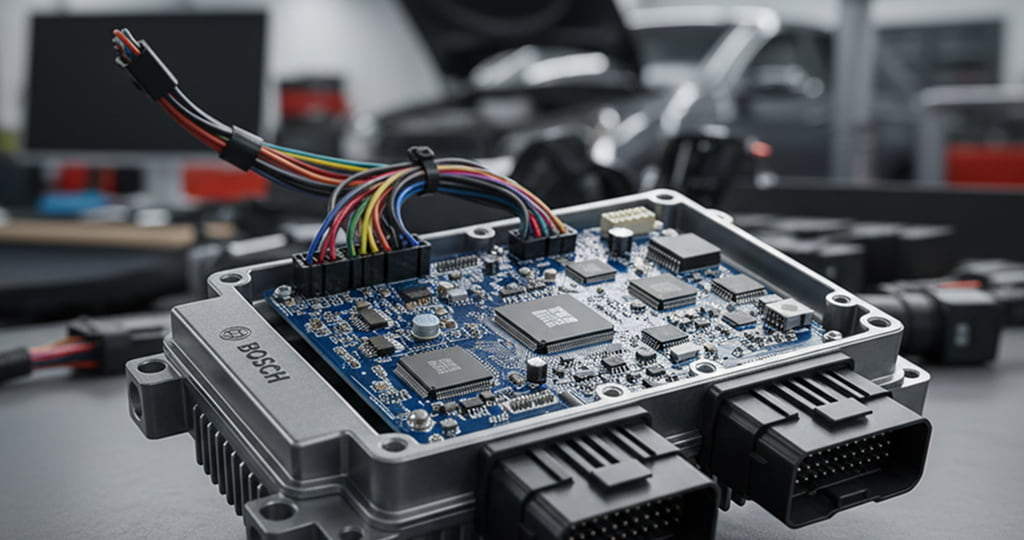
An ECU in a car is the Engine Control Unit, which manages engine functions such as fuel injection, ignition timing, and emissions control. It uses sensors to monitor performance and adjusts engine parameters in real-time to optimize power, efficiency, and emissions.
At its core, your ECU is constantly reading data from dozens of sensors scattered throughout your engine bay. Oxygen sensors tell it how efficiently fuel is burning. The mass airflow sensor reports how much air is entering the engine. Coolant temperature sensors keep tabs on operating temps.
The ECU takes all this information and makes split-second decisions about fuel injection timing, ignition advance, idle speed, and variable valve timing if your car has it.
The real magic happens in how it adapts.
Your ECU learns your driving habits over time, adjusting parameters to match whether you’re the type who babies their car or drives it like they stole it. It compensates for altitude changes, adjusts for different fuel qualities, and even accounts for engine wear as your car ages. Modern ECUs can store hundreds of different operational maps, switching between them seamlessly based on driving conditions.
So, whether you’re planning your next mod project or just curious about what makes your ride tick, getting familiar with your ECU opens up a whole new world of possibilities.
Think of this guide as your roadmap to understanding one of the most critical components in modern vehicles. We’ll cover where to find it, what it does, and why every gearhead should know their way around this essential piece of tech.
How to find the right ECU for your car?
Find the right ECU for your car by identifying your engine type, vehicle model, and tuning goals. Match ECU compatibility with your wiring harness and sensors, then choose between factory ECUs, standalone units, or piggyback systems based on modification level and desired control.
MotorMia helps cuts through the confusion by showing you exactly which ECUs work with your vehicle that are verified by owners who’ve successfully made the swap. See real installation experiences, compatibility notes, and where to find the best deals.
Where is the ECU located in my car?
Finding your ECU can sometimes feel like a treasure hunt since manufacturers don’t make it easy. Unlike your oil dipstick or battery, there’s no universal spot where every carmaker mounts their engine computer.
Most commonly, you’ll find the ECU in the engine compartment, often mounted to the firewall or tucked along the fender wells. German cars tend to favor locations near the windshield cowl, protected by plastic covers. Japanese manufacturers frequently place them behind the glove box or under the passenger seat.
American vehicles can have even more variation. Ford F-150s typically mount their ECUs on the passenger side firewall, while Chevy Silverados often tuck them near the battery box. Dodge Ram trucks you can check under the hood on the driver’s side.
Your best bet starts with your owner’s manual or online forums for your specific make and model. MotorMia’s community features can also connect you with other owners who’ve already located theirs.
Before handling your ECU, always disconnect the battery. Those multi-pin connectors require careful handling because forcing them can bend pins or crack the housing.
Does every car have an ECU?
Walk through any cars and coffee event, and you’ll see the divide clearly. The guy with the ’67 Camaro is tuning his carb with a screwdriver, while the owner of a ’97 model is plugging in a laptop. That’s the ECU difference right there.
Early ECUs appeared in the late 1970s to meet tightening emissions standards. By the mid-1980s, fuel injection systems demanded more sophisticated control, and true ECUs became standard. If your car was built after 1996 in the US, it definitely has an ECU since that’s when OBD-II became mandatory.
Pre-ECU vehicles relied on mechanical and vacuum-operated systems. Carburetors mixed fuel and air based on venturi principles. These systems worked but were never quite optimal anywhere.
The classic car world hasn’t ignored ECU technology. Retrofit fuel injection systems can transform a temperamental carbureted engine into something that starts instantly and idles smoothly. They’re popular with resto-mod builders who want classic looks with modern drivability.
What does the ECU control?
The ECU controls engine performance by managing fuel injection timing, air-fuel mixture ratios, and ignition spark timing. It also regulates idle speed, variable valve timing, turbocharger boost levels, and emissions control systems through real-time sensor data processing.
Understanding your ECU’s scope reveals why software modifications can dramatically transform vehicle behavior. This computer manages virtually every aspect of engine operation with millisecond precision.
Fuel injection
Fuel injection timing and duration represent the most fundamental controls. Your ECU calculates exactly when each injector should fire and for how long, adjusting these parameters based on dozens of sensor inputs. Direct injection engines add complexity with multiple injection events per combustion cycle. Get these parameters wrong and you’ll melt pistons faster than ice cream in Phoenix.
Ignition timing
Ignition timing proves equally critical yet more dangerous to modify. The ECU determines the precise moment to fire each spark plug, balancing maximum power against engine knock that can destroy components instantly. Modern systems monitor knock sensors thousands of times per second, ready to retard timing at the first sign of detonation.
Variable Valve Timing (VVT)
Variable valve timing systems add another dimension of control. By adjusting when valves open and close relative to piston position, the ECU essentially gives you different camshaft profiles on demand. Low RPM operation favors minimal overlap for smooth idle. High RPM operation increases overlap for maximum flow.
Turbocharger
Turbocharged engines introduce boost control complexity that makes naturally aspirated tuning look like child’s play. The ECU manages wastegate position or variable geometry vanes to maintain target boost while preventing overboost conditions. It coordinates boost changes with fueling and timing adjustments, ensuring smooth power delivery.
Everything beyond the engine
Electronic throttle mapping, rev limiters, speed limiters, traction control intervention, and even cooling fan operation all flow through ECU programming. Every aspect of engine behavior stems from tables and calculations within this single computer.
Types of ECUs in modern vehicles
Open the hood of a car from the 1990s, and you might find one or two computer modules. Pop the hood on anything recent, and you’re looking at a network of specialized computers.
Engine Control Module (ECM)
The ECM manages everything that makes your engine run. It reads sensor data and adjusts fuel injection pulse width down to the microsecond. When you hit the throttle, it calculates perfect ignition timing for maximum power without detonation.
Modern ECMs handle variable valve timing, electronic throttle bodies, and boost pressure on turbocharged engines. They even manage failure modes by switching to backup strategies when sensors fail.
Transmission Control Module (TCM)
Today’s TCM makes modern 8, 9, and 10-speed automatics possible. It monitors vehicle speed, engine load, and throttle position to determine perfect shift points. Your TCM learns your driving style, holding gears longer for aggressive drivers or upshifting early for fuel economy.
Body Control Module (BCM)
Your BCM handles convenience features like power windows, locks, mirrors, and lighting. Modern BCMs manage battery power distribution and control complex features. They know when you’re approaching with your key fob and can activate lights or adjust seats automatically.
Other Specialized ECUs
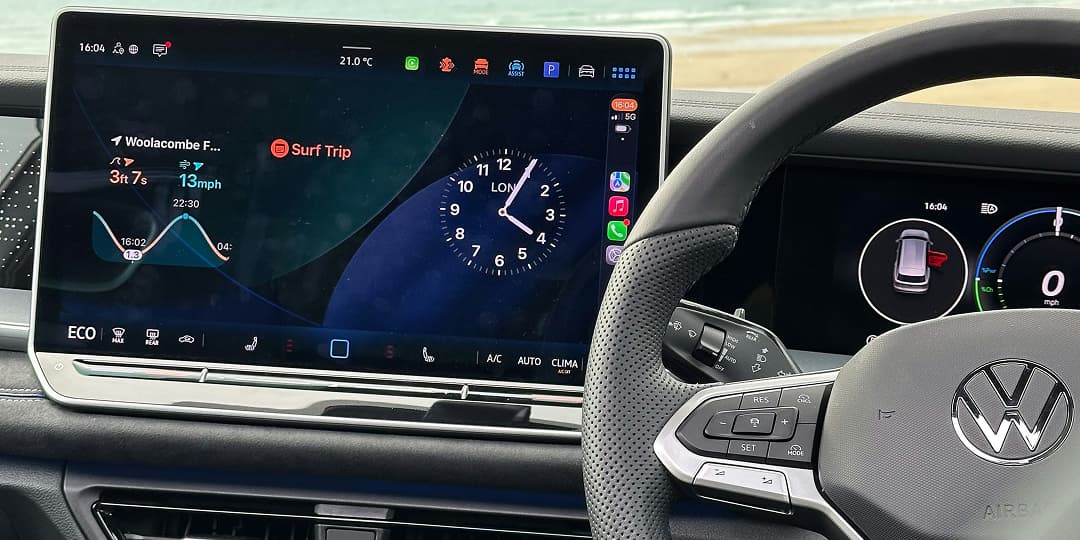
Premium vehicles might have 30 to 100 different modules. ABS controllers enable stability and traction control. Airbag modules monitor crash sensors. Infotainment systems run full operating systems. Each has dedicated computing power connected through the CAN bus network.
Curious about which modules your car has and what modifications are possible? MotorMia can show you what other enthusiasts have successfully upgraded on your exact vehicle.
What is the difference between ECU and PCM?
The main difference between an ECU and a PCM is their scope of control. An ECU (Engine Control Unit) manages only engine functions, while a PCM (Powertrain Control Module) controls both the engine and the transmission. PCMs integrate multiple systems for broader powertrain management.
Geographic differences can also be confusing. European manufacturers prefer ECU terminology, Americans favor PCM, and Japanese makers use both. Check your service manual or the module itself for proper labeling.
What are the differences between Engine Control Units and other vehicle ECUs?
The main difference between engine control units (ECUs) and other vehicle ECUs lies in their function. The engine ECU controls combustion, fuel injection, and ignition timing. Other ECUs manage systems like braking (ABS), airbags, infotainment, and climate control, each with separate software and sensors.
Your ECM operates in real-time with zero room for error. When a piston approaches top dead center at 6,000 RPM, the ECM has milliseconds to calculate spark timing. This demands specialized processors that guarantee response times.
Compare that to your BCM controlling power windows. A slight delay wouldn’t matter, so it uses simpler, cheaper processors. Safety-critical modules like airbag controllers have redundant processors and backup power supplies.
Engine controllers get priority on the CAN bus network. If your ECM needs to cut fuel to prevent damage, that message jumps ahead of mirror adjustment commands. This ensures critical functions always take precedence.
Conclusion
Your ECU transformed engines from mechanical compromises into precisely controlled powerplants delivering better power, economy, and emissions than anyone imagined possible.
Understanding these systems opens new ways to enjoy and modify your vehicle.
Modern tuning can optimize your car for specific needs through software alone. The distributed architecture enables features that enhance both performance and safety.
The enthusiast community embraces this evolution. Forums buzz with data logs alongside traditional discussions. MotorMia brings AI assistance to navigate complexity, connecting you with others who’ve solved similar challenges. Whether you’re chasing lap times or keeping your daily driver perfect, understanding your ECU helps you make better decisions.
Your ECU might just be a computer, but it’s your gateway to untapped potential. As technology advances, future capabilities will expand even further. But the fundamental goal remains unchanged: making vehicles better, more efficient, and more enjoyable to drive.
Ready to unlock your car’s potential? Download MotorMia to connect with enthusiasts who’ve already modded their ECUs, discover proven tuning solutions for your specific vehicle, and get AI-powered recommendations that think like a real car enthusiast, not just another parts catalog.
FAQ
Why do modern cars have multiple ECUs instead of just one?
Modern cars have multiple ECUs instead of one because each ECU controls a specific system, such as the engine, transmission, brakes, or infotainment. This modular design increases reliability, simplifies troubleshooting, and allows for specialized software tailored to each function.
What are common causes of ECU failure?
Common causes of ECU failure include water damage, voltage overloads, corrosion, manufacturing defects, and short circuits. These issues disrupt the ECU’s ability to process signals, leading to performance problems or system shutdown.
Can an ECU be repaired?
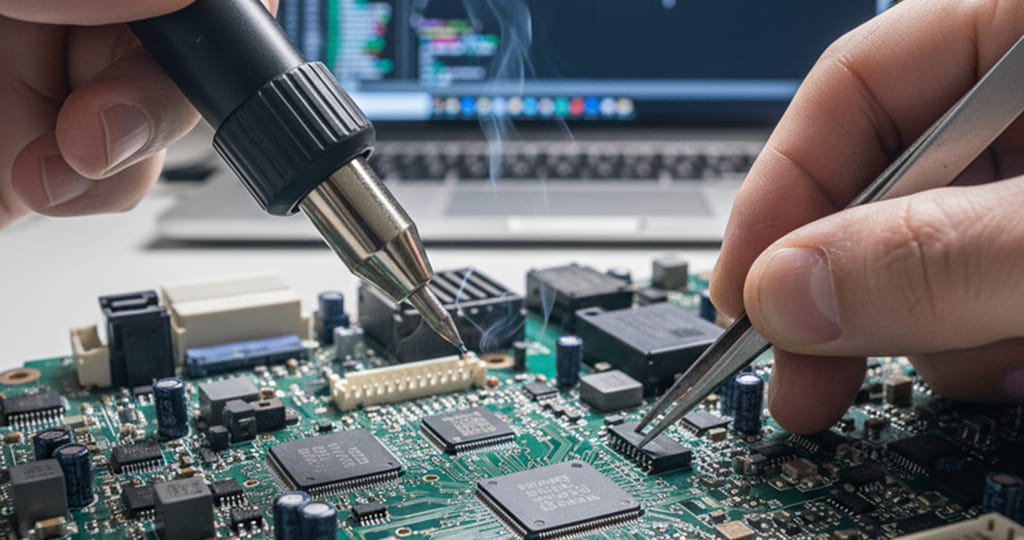
An ECU can be repaired if the damage is not severe. Repairs typically involve replacing damaged components, reprogramming software, or fixing solder joints. However, extensive damage may require full replacement.
Can an ECU be upgraded?
An ECU can be upgraded by flashing new software or installing a performance-tuned replacement. Upgrades improve power, fuel efficiency, or responsiveness but may void warranties or violate emissions regulations.
How much does it cost to replace an ECU?
Replacing an ECU costs between $500 and $2,000 depending on the vehicle make, model, and labor fees. Luxury vehicles and imported models usually cost more due to complex programming requirements.
Before you drop money on a replacement, Motormia can help you skip hours of parts research. MotorMia’s AI-powered search understands your car inside and out, suggesting ECU replacements and upgrades based on what other enthusiasts with your exact model are successfully running to give you personalized recommendations in seconds.