Build Your Dream Ride with Mia

Aftermarket Parts Guide: Complete Guide to Performance Components

Ed Little
•
Fabricator and Car Enrhusiast @ MOTORMIAThe aftermarket performance industry transforms everyday vehicles into personalized machines that match your driving ambitions. From subtle enhancements that sharpen throttle response to complete overhauls that double your horsepower, the aftermarket world offers solutions for every goal and budget.
This guide walks you through performance components, from understanding quality parts to choosing upgrades that deliver results. The difference between a successful build and an expensive mistake comes down to knowledge and smart component selection.
What are aftermarket parts?
Aftermarket parts are replacement components manufactured by companies other than the original vehicle manufacturer. These parts include everything from brake pads to body panels, produced by independent manufacturers like Bosch, Monroe, or Dorman. Aftermarket parts offer alternatives to OEM components at various price points and quality levels, ranging from budget replacements to performance upgrades that exceed original specifications.
The aftermarket industry emerged from racing communities who demanded more than manufacturers offered. Companies like Brembo, Bilstein, and Garrett develop technologies that often find their way into future OEM applications.
Performance aftermarket parts differ from standard replacements through intent and engineering. A performance brake pad uses advanced compounds providing better heat resistance and reduced fade. These parts are purposefully better for specific applications.
The beauty lies in choice. Where manufacturers offer one solution for average drivers, aftermarket companies provide options tailored to specific needs. Track day warrior? There’s a brake compound for that. This specialization lets you build a vehicle matching your exact requirements.
Overwhelmed by choices? Download MotorMia to get tailored recommendations for parts based on your goals and needs, backed by real installation data from thousands of builds.
Why performance components matter for car enthusiasts
Performance components transform the driver-machine relationship. Stock vehicles prioritize broad appeal and cost targets, leaving performance potential untapped. Aftermarket parts unlock that potential, turning competent vehicles into exceptional ones.
Manufacturers tune engines balancing power against warranty concerns and emissions standards. That conservative approach leaves significant gains available.
A simple ECU tune can unleash 20-30% more power from turbocharged engines. Add supporting modifications, and gains multiply.
Performance encompasses more than speed though. Upgraded suspension transforms vehicle response, inspiring confidence through corners, better brakes maintain consistent performance during hard use.
The enthusiast community drives innovation beyond manufacturer capabilities. Aftermarket companies focus on enthusiasts who demand excellence, bringing to the market specialized solutions that deliver what performance-minded drivers actually want.
Types of aftermarket performance parts
Aftermarket performance parts include engine upgrades, exhaust systems, suspension kits, brake enhancements, intake systems, forced induction, ECU tuning, cooling components, drivetrain modifications, and performance wheels and tires.
These parts improve power, handling, braking, and reliability, with gains ranging from 5–15 horsepower to doubling output in turbo builds.
Let’s look at these in more detail.
Engine performance upgrades
Cold air intakes replace restrictive factory airboxes with free-flowing designs. Quality systems from AEM or Injen add measurable power while improving engine sound. The key is ensuring they actually pull cold air, not hot air from the engine bay.
Performance camshafts shift the powerband higher for increased top-end power. Forced induction takes things further. Turbos use exhaust energy to compress intake air, while superchargers belt-drive for instant boost. Both can multiply power output when paired with proper supporting modifications like upgraded fuel systems, stronger internals, and enhanced cooling.
Exhaust system enhancements
Performance exhausts reduce backpressure and free up 5-15 horsepower. Headers replace cast manifolds with tuned tubes for better scavenging. Long-tube designs make more power but complicate installation. Short headers offer easier fitment with modest gains.
High-flow catalytic converters maintain emissions compliance while improving flow. Combined with proper mufflers, they balance performance gains with acceptable sound levels.
Suspension and handling components
Coilover systems from KW, Bilstein, or Ohlins provide adjustable ride height and damping. This allows precise tuning for street comfort or track performance. The handling transformation is immediate and dramatic.
Sway bars reduce body roll by connecting opposite wheels. Thicker bars improve turn-in response but can compromise ride quality if overdone. Polyurethane bushings eliminate the slop of rubber units, providing precise suspension control at the cost of increased NVH.
Brake system upgrades
Big brake kits increase rotor size and caliper piston count for better heat capacity and clamping force. Brembo, StopTech, and Wilwood offer proven solutions. The improved fade resistance and modulation transform braking confidence.
Pad selection depends on use. Street compounds work well cold but fade when hot. Track pads excel at temperature but squeal and dust heavily. Performance street pads balance both needs. Stainless lines and high-temp fluid complete the system.
Intake systems and air filters
Cold air intakes position filters away from engine heat, feeding denser air for more power. The difference between true cold air and hot air intakes can be 10-15 horsepower.
High-flow filters from K&N or AEM increase airflow while maintaining filtration. Optimizing the complete intake tract with smooth piping and proper sizing maximizes gains. Every restriction costs power.
Turbochargers and superchargers
Turbochargers use exhaust gases to spin compressors, effectively turning waste into power. Modern ball-bearing turbos minimize lag while delivering massive torque increases. Superchargers provide instant boost through belt-driven compressors. Roots types deliver immediate power, centrifugals build progressively.
Supporting modifications are mandatory: upgraded fuel delivery, forged internals, intercooling, and proper engine management. Without these, forced induction becomes an expensive failure.
ECU tuning and programmers
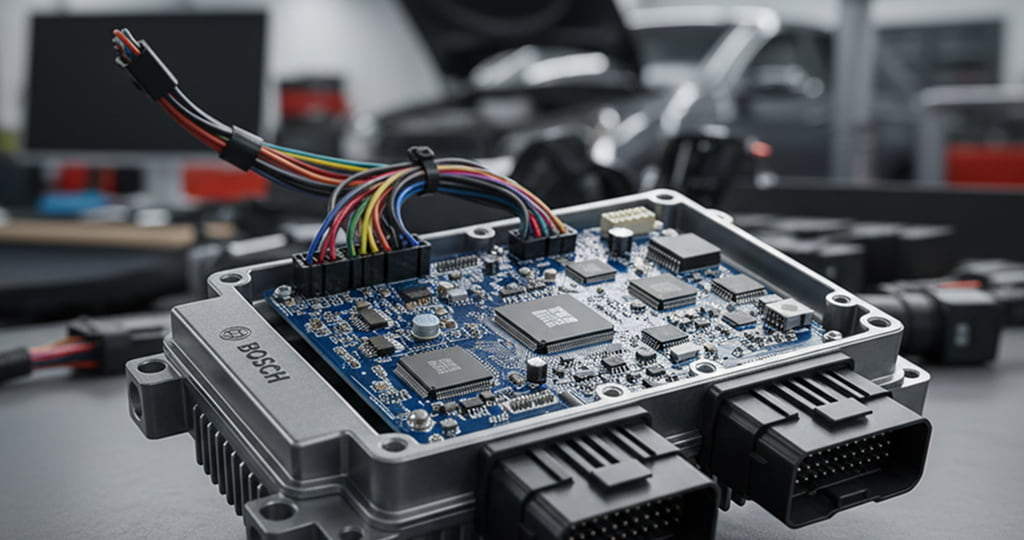
ECU tuning optimizes fuel, timing, and boost parameters for your specific modifications. Factory calibrations are conservative; proper tuning unlocks 20-30% more power from turbocharged engines through software alone.
Handheld programmers from Cobb or SCT offer pre-loaded tunes and data logging. Custom dyno tuning goes further, optimizing every parameter for maximum safe power. The difference in drivability and power delivery is substantial.
Cooling system upgrades
Performance driving generates heat that overwhelms stock cooling. Upgraded radiators with larger cores maintain safe temperatures during extended hard use. The difference between overheating and all-day reliability often comes down to radiator capacity.
Oil coolers are essential for track use. Thermostatic controls prevent overcooling during street driving. High-flow water pumps, electric fans, and lower-temperature thermostats further improve cooling efficiency.
Transmission and drivetrain parts
Performance clutches handle increased power through upgraded friction materials and clamping force. Organic compounds suit street use, while ceramic and metallic materials handle serious power at the expense of drivability.
Limited-slip differentials distribute power effectively between wheels, transforming launches and corner exits. Short-throw shifters and solid linkages improve shift precision and speed. These modifications enhance the mechanical connection between driver and drivetrain.
Performance wheels and tires
Tires are the most important performance modification. Everything happens through four small contact patches. Modern performance compounds offer incredible grip but require appropriate temperature conditions. Summer tires become dangerous below 40 degrees.
Lightweight wheels reduce unsprung weight, improving every aspect of performance. Forged wheels offer the best strength-to-weight ratio, flow-formed wheels provide good value. Proper sizing balances grip against rotational mass and acceleration.
Stop guessing what works. MotorMia’s AI analyzes thousands of builds to show you proven upgrade paths for your exact vehicle.
Pros and cons of using aftermarket parts
| Aspect | Pros | Cons |
| Performance | Significant power/handling improvements | Wrong parts reduce performance |
| Selection | Huge variety available | Overwhelming choices |
| Warranty | Quality brands offer coverage | May void vehicle warranty |
| Customization | Unlimited personalization | Can hurt resale value |
| Quality | Top brands exceed OEM | Wide variance exists |
Benefits of using aftermarket performance parts
Increased horsepower and torque
Performance parts unlock manufacturer-limited power. Bolt-on packages add 15-25% to naturally aspirated engines. Turbocharged engines gain 30-50% with basic modifications.
Scalability allows progression as budgets evolve. Components build upon each other creating compound improvements. Initial intake upgrades might add 10 horsepower, but combined gains exceed individual contributions.
Torque improvements transform daily driving. Mid-range torque makes highway merging safer and enjoyable. Turbocharged engines benefit from earlier boost building.
Better fuel efficiency and airflow
Performance modifications improve economy when properly executed. Free-flowing components reduce pumping losses. Performance filters reduce energy filling cylinders.
ECU tuning optimizes delivery for actual conditions. Leaner cruise mixtures improve efficiency without sacrificing power. Many report 10-15% better highway mileage.
Aerodynamic modifications reduce drag at highway speeds. Splitters and diffusers intended for stability can improve fuel economy during highway driving.
Enhanced vehicle handling and safety
Suspension upgrades improve control and safety. Reduced roll keeps tires planted during emergencies. Improved damping maintains contact over rough surfaces.
Brake upgrades provide shorter stops and better modulation. Fade resistance maintains effectiveness preventing accidents. Larger rotors dissipate heat better.
Tire upgrades offer dramatic safety improvements. Modern performance tires stop shorter and resist hydroplaning better than budget alternatives.
Customization and aesthetic appeal
Aftermarket parts enable personal expression. Build sleepers running 10-second quarters. Create show cars turning heads. Pursue function-focused modifications.
Visual modifications complement performance creating cohesive builds. Functional aerodynamics provide downforce while enhancing appearance. Lightweight wheels showcase brakes while reducing weight.
Community aspects enhance enjoyment. Shows and forums connect enthusiasts appreciating thoughtful modifications. Modified vehicles tell owner stories.
How to choose the right aftermarket parts
Know your vehicle make and model
Understanding your vehicle prevents mistakes. Every platform has established modification paths. Forums offer collective experience.
Platform knowledge extends beyond compatibility. Some engines respond better to certain modifications. These nuances separate successful builds from problems.
Model year variations matter. Manufacturers revise designs mid-year. Always verify using complete information including production dates.
Check compatibility and warranty
Compatibility encompasses physical and electronic fitment. Modifications might require supporting changes. Understanding ecosystems prevents incomplete upgrades.
Some modifications void specific coverage. Document everything and save receipts. Quality installations provide protection.
Read terms before purchasing. Requirements vary between manufacturers. Understanding prevents denied claims.
Research brand reputation and reviews
Forums reveal real-world experiences. Long-term reports matter most. Search specific part numbers. Patterns emerge from multiple reports.
Professional reviews provide technical analysis. Dyno testing validates claims. Comparison tests rank objectively.
Social media offers immediate feedback. Direct message owners about experiences. Enthusiasts share knowledge gladly.
Understand your performance goals
Define objectives before purchasing. Quarter-mile builds differ from autocross preparation. Daily drivers need different considerations.
Consider mechanical abilities and resources. Complex modifications might exceed DIY capabilities. Local expertise varies.
Budget realities shape goals. Performance costs money. Plan complete paths understanding total pictures.
Identifying reputable manufacturers
Established companies with racing heritage produce quality. Active competition validates engineering. Grassroots support shows enthusiast understanding.
Certifications indicate capabilities. SEMA membership shows industry commitment. Credentials separate legitimate manufacturers.
Customer service reveals confidence. Quality manufacturers provide support and guidance. Avoid companies hiding behind distributors.
Price vs quality
Mid-priced options often provide best value. Budget options disappoint through poor materials. Premium prices sometimes reflect reputation.
Consider total costs beyond purchase. Installation affects labor. Maintenance varies. Calculate complete ownership costs. Quality shows in details. Precise machining and proper materials separate quality from junk. These predict satisfaction.
Where to buy aftermarket performance parts
Finding reliable sources matters. The marketplace spans online retailers to local shops. Each offers advantages. Smart shoppers compare maximizing value. Building supplier relationships pays dividends.
Online marketplaces vs. specialty retailers
Major marketplaces offer convenience through scale. Amazon and eBay stock everything with quick shipping. Multiple sellers enable comparison. Limited expertise requires careful vetting.
Specialty retailers like Summit Racing focus exclusively on performance. Staff provide technical support preventing mistakes. Companies stake reputations on satisfaction.
Direct manufacturer sales ensure authenticity. Access complete product lines. Technical support comes from the source.
Trusted performance part suppliers
FCP Euro offers lifetime replacement guarantees demonstrating confidence. European vehicle expertise runs deep. RockAuto provides unbeatable prices through minimal overhead.
Tire Rack revolutionized wheel sales through testing and reviews. Comparison tools simplify selection. Verified customer reviews help decisions.
Local shops provide immediate gratification. Experienced staff prevent errors. Supporting local strengthens communities.
Why aftermarket parts are essential for serious tuners
OEM engineering prioritizes compromise over capability. Mass production prevents performance optimization. Aftermarket parts remove constraints enabling focused development.
Tuning requires flexibility factories can’t provide. Each modification reveals new bottlenecks. Variety allows progression as skills evolve.
Competition drives innovation impossible for traditional manufacturers. New technologies appear constantly. Rapid development benefits enthusiasts through better products.
Community knowledge accelerates learning. Forums and events connect enthusiasts worldwide. Collective experience reveals optimal combinations.
Conclusion
The aftermarket world offers endless possibilities. Quality parts enable automotive dreams from subtle improvements to radical transformations. Success requires research and realistic expectations.
Your perfect build exists between factory limitations and aftermarket potential. The right parts and knowledge create exceptional vehicles. The journey teaches valuable lessons about engineering and capability.
The aftermarket industry stands ready to transform ordinary vehicles into extraordinary machines reflecting your passion.