Build Your Dream Ride with Mia
First Car Modifications: Best Starter Mods for Your First Car

Ed Little
•
Fabricator and Car Enrhusiast @ MOTORMIAHere’s what nobody tells you about your first build: starting smart beats going hard every single time. The difference between enthusiasts who build legendary rides and those who end up with undriveable money pits often comes down to those first few modifications.
Choose wisely and you’ll improve performance while learning valuable skills. Choose poorly and you’ll blow your budget on parts that make your car worse.
The best first modifications deliver noticeable improvements without requiring you to tear half the engine apart. They teach you about your car’s systems while actually enhancing the driving experience. Most importantly, they’re reversible if you decide to change direction later.
If you’re just getting started with mods, MotorMia can guide you through every step, from choosing your first upgrades to finding compatible parts and understanding installation difficulty. No more wondering if that intake will fit or if those wheels will clear your brakes.
Best first mods for new enthusiasts
1. Cold air intake systems
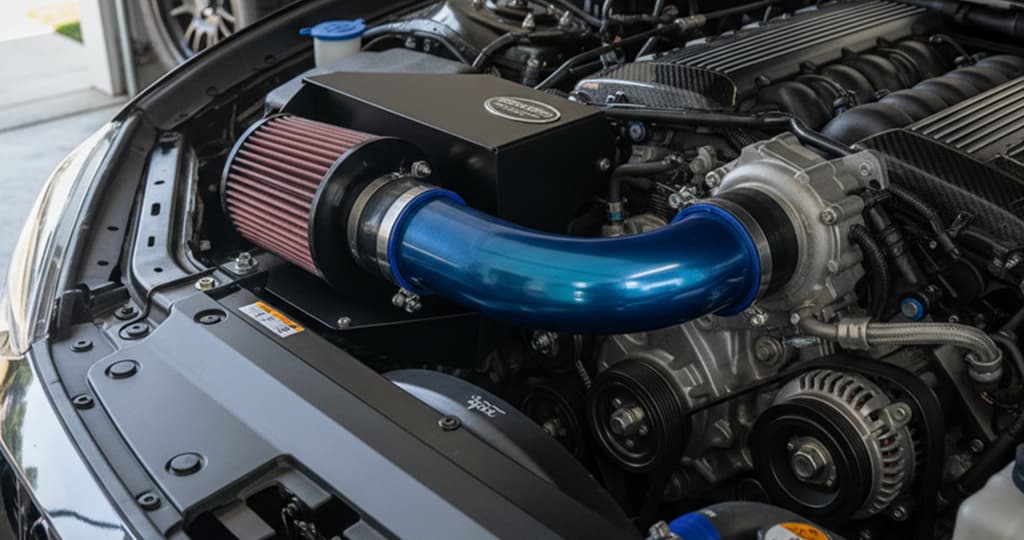
A cold air intake ranks as the perfect gateway mod for good reason. You get to pop the hood, turn some wrenches, and actually feel a difference when you mash the throttle. Most intakes install in under an hour with basic tools, making them ideal for building confidence.
The performance gains vary wildly by platform. Turbocharged cars often see bigger improvements since cooler, denser air helps the turbo work more efficiently. Naturally aspirated engines might gain 5 to 15 horsepower, but the improved throttle response and intake sound make it worthwhile regardless. Plus, quality intakes with washable filters save money long-term versus replacing paper filters.
2. Performance tires
Tires are the only part of your car actually touching the road, yet most people overlook them for flashier mods. Upgrading from all-seasons to performance summer tires transforms how your car handles, brakes, and puts down power. The difference feels like switching from work boots to running shoes.
Good rubber makes every other modification work better. That new intake’s extra power means nothing if your tires just spin. Upgraded brakes can’t stop you faster than your tires’ grip allows. Even stock cars feel dramatically sharper with proper performance tires. Just remember summer tires turn rock-hard below 40 degrees, so factor in your climate.
3. Upgraded brake pads
Stock brake pads prioritize quiet operation and low dust over actual stopping power. Performance pads flip that equation, trading some comfort for serious grip when you need it most. The installation process teaches you brake system basics while delivering immediate safety improvements.
Street performance pads offer the best balance for daily driving. They’ll stop shorter than stock, handle repeated hard braking better, and last surprisingly long if you’re not tracking the car. Yes, they’ll dust up your wheels more, but that’s a small price for confidence-inspiring braking. Pair them with quality brake fluid for even better pedal feel.
4. Aftermarket exhaust (cat-back)
A cat-back exhaust system lets your engine breathe better while giving it a voice. Since you’re only replacing components after the catalytic converter, emissions remain legal and installation stays manageable for beginners. The weight savings from ditching heavy factory mufflers is an often-overlooked bonus.
Sound is subjective, so research exhausts specific to your car before buying. That aggressive system that sounds perfect on a V8 might drone terribly on your four-cylinder. Quality systems balance performance gains with liveable volume levels. Avoid straight pipes or muffler deletes unless you enjoy getting pulled over and annoying everyone within a mile radius.
5. ECU tune or flash (basic)
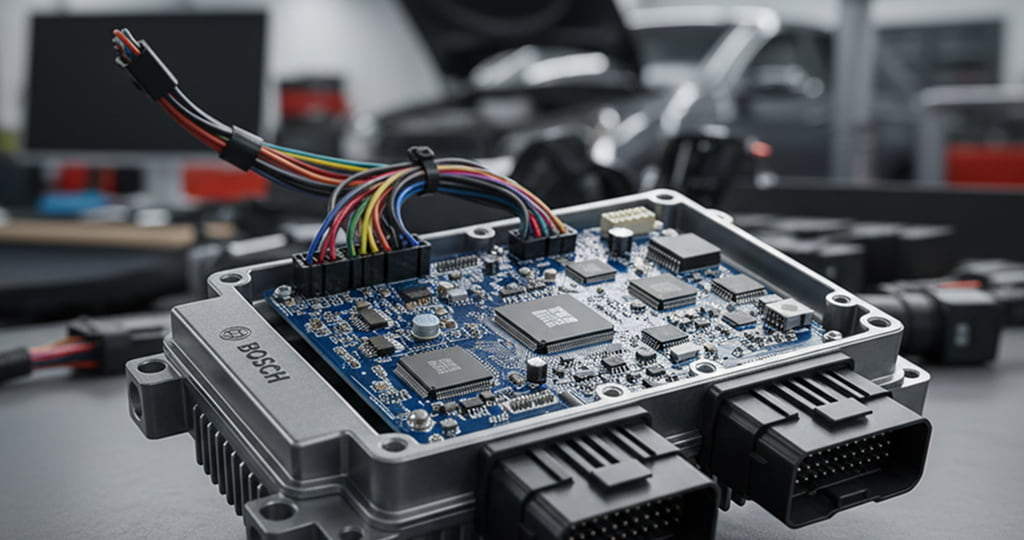
Modern cars leave surprising power on the table for reliability and emissions margins. A quality tune optimizes fuel and timing maps to safely extract that hidden performance. Off-the-shelf tunes from reputable companies offer solid gains without the cost of custom dyno tuning.
Stick with established tuners who understand your platform. Research which modifications require tune updates to run properly. Many intakes and exhausts actually need supporting tunes to prevent check engine lights or poor running. If you’re planning multiple engine mods, consider waiting to tune until they’re all installed.
6. Lightweight wheels
Dropping unsprung weight with lighter wheels improves acceleration, braking, and handling all at once. Every pound shed from your wheels equals several pounds removed from the chassis in terms of performance feel. The visual transformation doesn’t hurt either.
Focus on weight savings over size increases. Those 19-inch wheels might look sick, but if they’re heavier than your 17-inch stocks, you’re moving backward performance-wise. Quality lightweight wheels cost more but deliver real improvements. Cheap heavy wheels just make your car slower while looking marginally better.
7. Short-throw shifter
Manual transmission drivers know the satisfaction of a perfect shift. Short-throw shifters reduce shift travel, making gear changes quicker and more precise. The installation usually requires dropping the exhaust, giving you valuable experience working under your car.
The reduced throw takes adjustment but rewards smooth drivers with rifle-bolt precise shifts. Avoid going too short, as extremely reduced throw increases effort and can make daily driving tiresome. Quality shifters maintain proper shift gate alignment while cheap ones can cause missed shifts or grinding.
8. Strut bars and bracing
Chassis bracing might not photograph well for Instagram, but the handling improvements are real. Strut tower bars reduce flex during cornering, keeping your suspension geometry consistent. The bolt-on installation makes this an easy afternoon project.
Front strut bars deliver the most noticeable improvement on most cars. The stiffer connection between shock towers translates to sharper turn-in and more predictable handling. Rear bars and undercarriage bracing offer diminishing returns unless you’re seriously tracking the car. Start simple and add more if needed.
9. Aesthetic upgrades (wraps, lights, etc.)
Visual modifications let you personalize without affecting reliability. Vinyl wraps protect paint while allowing wild color changes. LED interior lights modernize older cars. Window tint reduces heat and adds privacy. These mods build confidence with minimal risk.
Keep aesthetics tasteful unless you’re building a show car. Clean, subtle modifications age better than trendy additions. Quality materials matter here since cheap vinyl fades and LED bulbs fail quickly. Remember that some aesthetic mods like dark tint or certain light colors may not be street legal everywhere.
10. Basic audio system improvements
Factory audio systems often use paper-cone speakers and minimal sound deadening. Upgrading speakers and adding basic dynamat transforms your daily commute. The installation process teaches you about car interiors and electrical systems.
Start with quality replacement speakers that fit factory locations. Adding a small powered subwoofer fills out the bottom end without requiring major electrical upgrades. Sound deadening material reduces road noise while improving speaker performance. Avoid going overboard with massive systems that add weight and drain your electrical system.
Mods to avoid as a first-time modifier
1. Turbo/supercharger kits
Forced induction on a naturally aspirated engine requires supporting modifications that cascade into basically rebuilding everything. You’ll need fuel system upgrades, engine internals, cooling improvements, and extensive tuning. The complexity and cost spiral quickly beyond beginner territory.
2. Full engine swaps
Engine swaps sound cool until you’re elbow-deep in wiring harnesses trying to make incompatible computers talk. Even “easy” swaps require fabrication skills, specialized knowledge, and often custom parts. Save this for when you’ve got experience and a second car to daily drive.
3. Unregulated emissions deletes
Removing catalytic converters or EGR systems might free up power, but it’s federally illegal and makes your car stink. Many states require emissions testing that deleted cars will automatically fail. The minimal gains aren’t worth the legal risk and environmental damage.
4. Lowering beyond safe/usable limits
Slamming your car might get likes on social media, but scraping over every speedbump gets old fast. Extreme lowering accelerates wear on suspension components and can make alignment impossible. Function-destroying stance builds are best left to people with trailer queens, not daily drivers.
How to track the impact of your mods
Measuring improvements keeps you honest about what actually works versus what just empties your wallet.
Even simple before-and-after testing helps justify purchases.
Keep detailed records of every modification including dates, costs, and measured improvements. This documentation helps with insurance claims, resale value, and planning future upgrades. Photos of the installation process prove proper work was done.
That’s where Motormia can help. MotorMia’s build tracker automatically catalogs your modifications with performance data, creating a comprehensive history that helps you analyze what worked and plan what’s next.
Common Mistakes to Avoid with First Modifications
Over-Modifying Without Planning
The shotgun approach of buying whatever’s on sale rarely creates cohesive builds. Parts that don’t work together waste money and create headaches. That bargain turbo kit becomes expensive when you realize your fuel system, clutch, and cooling can’t handle it.
Ignoring Proper Installation Procedures
YouTube University only teaches so much. Skipping torque specs, reusing gaskets, or improvising solutions creates problems down the road. Invest in proper tools and take time to do jobs right. A stripped oil pan thread costs way more than the torque wrench that would’ve prevented it.
Choosing Style Over Function
Those parts might look incredible, but if they make your car worse, what’s the point? Fake carbon fiber adds weight. Massive wheels without proper tires ruin handling. eBay coilovers often ride worse than worn stock suspension. Prioritize genuine improvements over cosmetic junk.
Neglecting Regular Maintenance
Modified cars need more attention, not less. Higher-performance brake pads need quality fluid that gets changed more often. Tuned engines stress oil harder. Performance tires wear faster. Skipping maintenance because you spent the money on mods leads to catastrophic failures.
How Much Should You Budget for First Car Mods?
Budget $1,000 to $2,500 for your first car mods. Entry-level upgrades like tires, brake pads, intake, and exhaust typically cost $200–$800 each. Suspension kits range from $500–$1,200. Set aside extra for installation if you’re not doing the work yourself.
This covers quality parts and leaves room for tools and unexpected expenses.
Allocate roughly 20% for tools you’ll need repeatedly. Good jack stands, torque wrenches, and basic hand tools pay for themselves quickly. Another 10% should go toward maintenance items, because that performance air filter won’t help if your oil looks like tar.
Buy quality parts once rather than junk twice. That $200 intake might seem expensive compared to the $50 eBay special, but it’ll actually fit, perform better, and last longer. Research, save, and buy right. Your future self will thank you when everything works properly and looks professional under the hood.