Build Your Dream Ride with Mia

What Is ECU Chip Tuning? Everything You Need To Know Before You Tune

Ed Little
•
Fabricator and Car Enrhusiast @ MOTORMIABefore you start pulling ECUs and swapping chips, you need to understand what you’re getting into. Chip tuning was revolutionary in the ’90s and early 2000s, giving enthusiasts their first real taste of electronic performance modification.
Today’s tuning landscape looks different, with multiple options competing for your dollars and promising similar gains through different methods.
The truth is chip tuning still has its place, especially for specific vehicles and budgets. But knowing when it makes sense versus when you should consider alternatives could save you from expensive mistakes or missed opportunities.
What is ECU chip tuning?
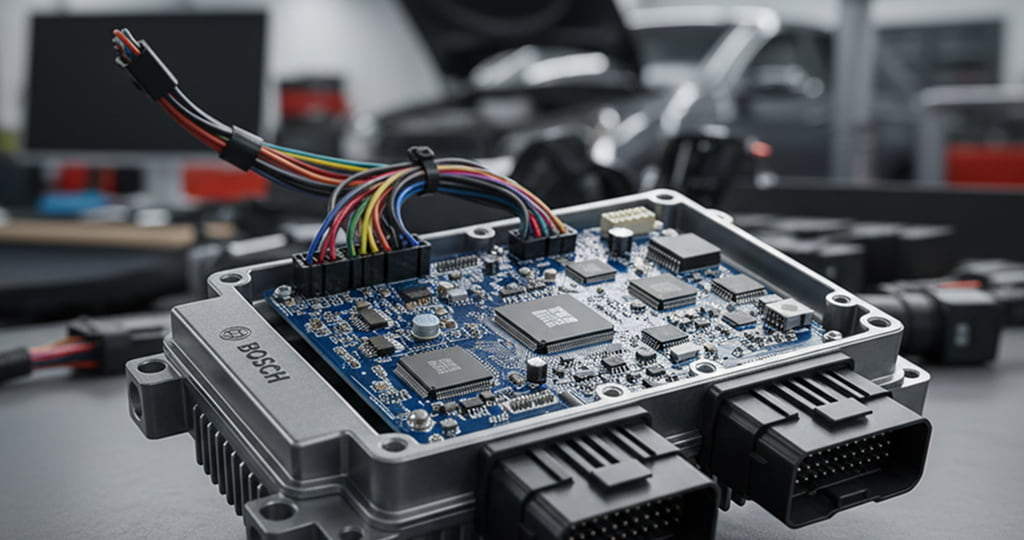
ECU chip tuning involves physically replacing or modifying the memory chip inside your engine control unit. This chip contains the programming that tells your engine how much fuel to inject, when to fire the spark plugs, and dozens of other parameters that determine how your engine runs. By changing this programming, you can unlock power the manufacturer left dormant.
Think of it like this: your engine is capable of making 250 horsepower, but the factory programmed it to make 200 for reliability, emissions, and to create a performance gap between trim levels.
A performance chip rewrites those conservative parameters to extract more of your engine’s potential. Unlike modern flash tuning that rewrites software, chip tuning means physically handling hardware, either replacing the entire chip or modifying the existing one.
The process gained popularity when enthusiasts discovered that many European cars, particularly turbocharged models, responded dramatically to chip changes. A simple chip swap could add 20% more power on some vehicles, transforming sluggish commuters into legitimate performance machines. Word spread quickly through car forums and dyno day results.
How does chip tuning work?
Your ECU’s chip contains thousands of data points arranged in tables and maps. These control everything from idle speed to wide-open throttle fuel delivery. Chip tuners modify these values to optimize performance rather than emissions or longevity.
On older vehicles, typically pre-2000 models, the process involves removing the ECU, desoldering the original chip, and either replacing it entirely or using a chip programmer to rewrite its contents. Some setups use a “piggyback” chip that intercepts and modifies signals between the original chip and the ECU’s processor.
The most common modifications include advancing ignition timing for more power, richening fuel mixtures under boost, raising rev limiters, and removing speed governors. Turbocharged engines often see the biggest gains since chip tuning can increase boost pressure substantially. A stock 1.8T making 150 horsepower might jump to 190 or more with just a chip change.
When is chip tuning still relevant?
Despite newer tuning methods, chip tuning remains the best or only option for certain vehicles. Cars from the late ’80s through early 2000s often require physical chip modification since they lack the OBD-II ports and protocols needed for software flashing. If you’re modifying a classic BMW E30, Mercedes 190E 2.3-16, or early Audi S4, chip tuning might be your only path to electronic performance gains.
Budget also plays a role. While modern tuning solutions can cost $500 to $1,000 or more, basic performance chips for older vehicles often run $200 to $400. For enthusiasts working with limited funds or older platforms, the cost-effectiveness of chip tuning remains attractive. You’re getting real performance gains for less than the price of a quality exhaust system.
Geographic location matters too. In areas where professional tuners are scarce or expensive, mail-order chips provide accessible performance upgrades. You might not have a dyno tuner within 200 miles, but you can order a proven chip tune and install it yourself.
ECU remapping vs. chip tuning
The main difference between ECU remapping and chip tuning is how the engine control unit is modified. ECU remapping reprograms the car’s existing software via the OBD port, while chip tuning involves physically replacing or modifying the ECU chip. Remapping is more precise; chip tuning suits older vehicles.
You can have different maps for daily driving versus track days, something impossible with a fixed chip. Remapping also allows for incremental changes as you add modifications.
But remapping requires compatible ECUs and software, which older vehicles lack. Your 1995 Corrado VR6 won’t accept a laptop connection for remapping, but it will happily run a performance chip. Cost factors in too since remapping often requires expensive software licenses or dyno time, while proven chip tunes offer plug-and-play performance at a fixed price.
Benefits of ECU chip tuning
ECU chip tuning improves horsepower, torque, throttle response, and fuel efficiency. Turbo engines can gain 20–30% more power, while naturally aspirated engines see 5–10%. Chip tuning also removes speed or rev limiters and is cost-effective for older vehicles, offering strong dollar-per-horsepower performance gains.
Let’s take a closer look at the 5 main benefits of chip tuning.
Improved horsepower and torque
The headline benefit remains power gains, particularly in turbocharged engines. Naturally aspirated engines might see 5-10% improvements, but forced induction motors can gain 20-30% or more. That translates to real-world differences you’ll feel every time you merge onto highways or pass slower traffic. The gains come from optimizing parameters the factory set conservatively.
Removal of speed limiters or rev limiters
Factory limiters exist for various reasons including tire ratings, driveline protection, or market positioning. Chip tuning can remove the 155 mph governor on your German sedan or raise the rev limiter for better track performance. Just understand that these limits existed for reasons, so exceeding them means accepting additional risk and wear.
Better throttle response and fuel maps
Beyond peak power, chips improve how your engine delivers that power. Sharpened throttle response makes the car feel more alive, reacting instantly to pedal inputs. Optimized fuel maps can even improve economy during cruise conditions while adding power when you need it. The difference in daily driving often impresses more than dyno numbers.
Cost-effective for older vehicles
For pre-OBD-II cars, chip tuning offers the best performance value available. You’re getting engineered improvements for less money than quality tires. The return on investment beats almost any other modification when you consider dollar-per-horsepower gains, especially on platforms where chips are well-developed with years of refinement.
Limitations and risks of chip tuning
Every modification involves trade-offs, and chip tuning comes with several you need to understand before committing. These aren’t necessarily deal-breakers but ignoring them leads to disappointment or damage.
No real-time adjustability
Once a chip is installed, those parameters are fixed. You can’t dial back timing if you get bad gas or add boost for race fuel. This inflexibility means choosing conservative tunes for daily drivers or accepting the risks of aggressive calibration.
No diagnostics or OBD logging
Chips don’t provide data logging or diagnostic capabilities. You’re flying blind without real-time feedback about how your engine is running. Modern tuning solutions offer extensive logging to monitor engine health and optimize performance. With chips, you’re trusting that everything’s working properly without verification tools.
Potential for ECU failure if improperly installed
Chip installation requires soldering skills or professional help. One wrong move can brick your ECU, turning a simple upgrade into an expensive lesson. Static discharge, excessive heat, or poor connections create failure points. Even experienced installers occasionally damage boards, so factor potential ECU replacement into your risk assessment.
Compatibility limitations with modern systems
Newer vehicles integrate systems in ways that make chip tuning problematic or impossible. Encrypted ECUs, integrated security systems, and networked controllers mean you can’t just swap chips like the old days. Even cars from the mid-2000s often resist chip tuning, requiring more sophisticated approaches.
Is chip tuning still worth it?
ECU chip tuning is still worth it for older or turbocharged vehicles. It delivers 5–30% power gains, sharper throttle response, and improved fuel efficiency. For pre-OBD-II cars, it’s a cost-effective upgrade. However, modern cars benefit more from ECU remapping due to advanced factory software and better tuning access.
Consider your goals honestly. Want a bit more punch from your daily driver without spending thousands? A mild chip tune might be perfect. Building a dedicated track car that needs constant adjustment? Look elsewhere.
The key is matching the solution to your needs rather than choosing based on price alone.
With Motormia, you can map out the right modification path for your car step by step, tailored to your exact model and see which parts and mods give you the gains that you need. Instead of guessing what works, you see proven upgrade routes tailored to your exact model, with insights on performance, cost, and long-term reliability.