Build Your Dream Ride with Mia
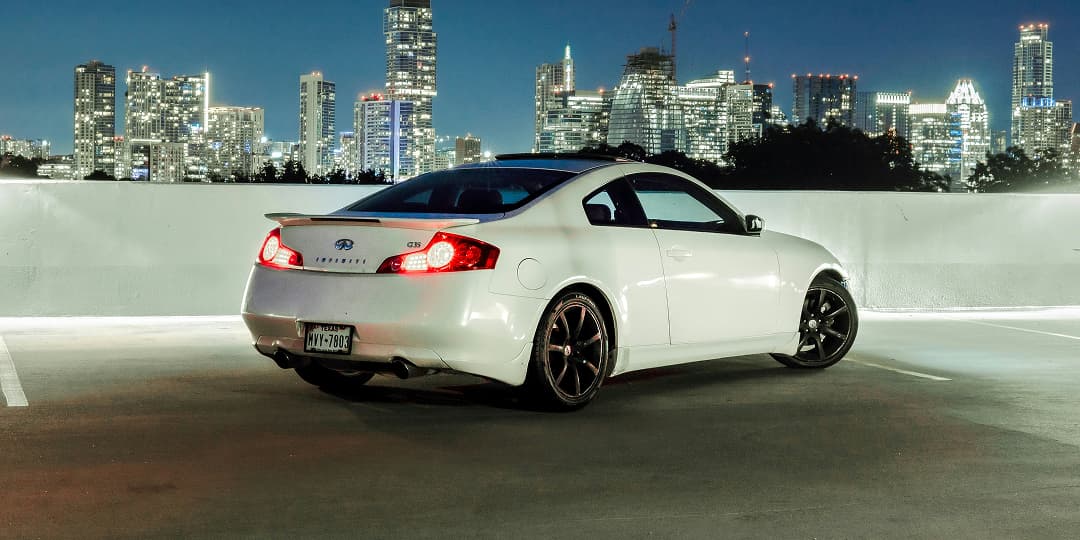
Best Mods and Customizations for INFINITI G35

Ed Little
•
Fabricator and Car Enrhusiast @ MOTORMIAThe G35 represents one of the best performance bargains in the used car market. With its bulletproof VQ35DE or VQ35HR engine, rear-wheel drive layout, and timeless styling, it’s no wonder these cars have become modification favorites.
Whether you snagged a clean coupe or a practical sedan, the aftermarket has your back with endless options to transform your G into something special.
These cars respond incredibly well to modifications, with even basic bolt-ons yielding noticeable gains. The VQ engine’s distinctive exhaust note becomes absolutely intoxicating with the right exhaust setup, and the chassis begs for suspension upgrades to unlock its true potential.
But before you start ordering parts, having a clear modification path saves both money and headaches but takes a lot of research. That’s where our AI powered app comes in handy.
MotorMia’s AI-powered platform can analyze your specific G35 model and suggest proven modification combinations that work together, helping you avoid compatibility issues and maximize performance gains based on your goals and budget.
Essential performance upgrades
The VQ35 engine loves to breathe, and opening up its respiratory system delivers immediate results. Smart G35 owners start with intake and exhaust modifications that complement each other, creating a foundation for future power gains while improving throttle response and sound.
Here are some of the most essential performance upgrades for the INFINITI G35.
Cold air intake systems and plenum spacers
Cold air intakes remain one of the go-to first modifications for good reason. Quality systems from Stillen, AEM, and Injen relocate the filter away from engine heat, pulling cooler, denser air that translates to real power gains. Expect 8-15 horsepower depending on your setup, plus improved throttle response that makes daily driving more engaging.
Plenum spacers take things further by improving airflow distribution to all six cylinders. The Motordyne 5/16″ spacer has become the gold standard, good for another 5-8 horsepower throughout the rev range. Installation takes about an hour with basic tools, making it perfect for garage warriors. The combination of intake and spacer typically yields 15-20 wheel horsepower on a stock car.
You can use MotorMia to check exactly what gains each available part will get once installed.
Exhaust system options (cat-back, headers, test pipes)
The G35’s exhaust note transforms from refined to race-inspired with the right components. Cat-back systems offer the best bang for buck, with options ranging from mild to wild. Invidia’s Gemini maintains a civilized tone for daily driving, while the Tomei Expreme Ti screams at wide-open throttle. Most quality cat-backs add 10-15 horsepower while shedding significant weight.
Headers and test pipes push gains further but require careful consideration. Long-tube headers from Motordyne or PPE can add 20+ horsepower but complicate installation and emissions compliance. High-flow cats or test pipes free up another 10-15 horsepower, though straight pipes will throw check engine lights without proper tuning. The full bolt-on package with intake, headers, and exhaust can push naturally aspirated G35s past 300 wheel horsepower.
ECU tuning with UpRev or EcuTek
Tuning ties everything together, optimizing fuel and timing maps for your specific modifications. UpRev dominates the G35 tuning scene with its user-friendly interface and extensive tuner network. Basic bolt-on tunes typically add 15-25 horsepower while improving drivability and removing speed limiters.
EcuTek offers more advanced features for serious builds, including launch control and flat-foot shifting. Remote tuning has made quality calibration accessible everywhere, though dyno tuning still provides the most precise results. Budget $400-700 for professional tuning, which becomes mandatory with significant modifications to prevent running lean and damaging your engine.
Turbo and supercharger kits for VQ35DE/HR
Forced induction transforms the G35 from quick to genuinely fast. Single turbo kits from Boost Logic or Gamma Motorsports can push 500+ horsepower reliably with supporting modifications. The VQ35HR handles boost better than the DE, but both engines prove surprisingly robust when properly built.
Supercharger kits from Stillen or Vortech offer more linear power delivery and easier installation. The Stillen kit maintains emissions compliance in most states while adding 100+ horsepower. Expect to invest $5,000-8,000 for quality forced induction, plus supporting mods like fuel systems and clutch upgrades. Built engines can handle 700+ horsepower, though at that point you’re deep into race car territory.
Suspension and handling modifications
The G35’s capable chassis responds brilliantly to suspension upgrades. Whether you’re chasing lap times or just want a better stance, the right suspension transforms how your G drives and looks.
Coilover selection guide
Coilovers offer the ultimate in adjustability and performance. BC Racing BR-series provide excellent value with 30-way damping adjustment and full height customization. For track warriors, Fortune Auto 500-series or KW V3 coilovers deliver professional-grade handling with street comfort.
Spring rates matter as much as brand names. Street-friendly setups run 8-10k front and 6-8k rear, while track builds might push 12-14k all around. Most G35 owners find the sweet spot around 10k/8k for aggressive street driving. Quality coilovers transform the G35’s handling while allowing you to dial in your perfect ride height without sacrificing suspension travel.
Finding the right coilover setup for your specific driving style can be tricky. MotorMia’s modification finder uses real user data to match you with suspension setups that other G35 owners with similar goals have tested and proven, with links to parts suppliers.
Camber arms and toe bolts
Lowering your G35 throws alignment into chaos, making adjustable arms essential for proper tire wear and handling. SPL Parts leads the pack with their precision-machined pieces, though ISR and Z1 offer budget-friendly alternatives that work well for street cars.
Front upper control arms allow camber adjustment beyond factory specs, crucial for lowered cars. Rear camber arms prevent excessive negative camber that eats tires. Toe bolts fine-tune rear alignment for optimal rotation. The full set runs $600-1,200 depending on brand choice. Proper alignment after installation is non-negotiable, as incorrect settings will destroy tires and ruin handling.
Big brake kit options
Stock G35 brakes work adequately for street use but fade quickly on track. Akebono sport calipers from 350Z Track models bolt directly on, providing a significant upgrade for minimal cost. True big brake kits from Stoptech, Wilwood, or AP Racing transform stopping power and heat management.
Front 6-piston setups with 14-inch rotors handle repeated track abuse while looking impressive behind wheels. 4-piston rear kits balance braking and prevent ABS confusion. Budget $2,000-4,000 for quality BBKs, which often require 18-inch or larger wheels for clearance. Upgraded pads and fluid provide surprising improvements for street cars not ready for full brake conversions.
Wheel and tire upgrades
Wheels define your G35’s style while affecting performance and handling. The massive aftermarket means finding your perfect setup, though fitment knowledge prevents expensive mistakes.
Popular JDM Wheel Fitments (18-19 inches)
Japanese wheels suit the G35’s character perfectly. Work Emotion CR Kai, Rays Gram Lights 57DR, and Volk TE37 dominate the scene for good reason. They’re lightweight, strong, and look incredible. Standard fitments run 18×9.5 +22 front and 18×10.5 +15 rear, filling the fenders without major modifications.
Moving to 19s opens more aggressive options. The classic 19×9.5 +20 and 19×10.5 +22 setup fits perfectly with mild lowering. Forged wheels like Rays Engineering save significant unsprung weight, improving acceleration, braking, and handling. Replica wheels tempt with low prices but often crack under hard use, making quality wheels worth the investment.
Aggressive offset and spacer setups
Flush fitment fever drives many G35 builds toward aggressive offsets. Running 18×10.5 +15 square setups creates that coveted tucked look but requires fender work and careful tire selection. Spacers offer flexibility, letting you run various wheel options while achieving desired fitment.
Quality hub-centric spacers from H&R or Ichiba prevent vibrations common with universal units. 15-20mm spacers push stock wheels flush, while 25-30mm enables seriously aggressive setups. Remember that spacers add stress to wheel bearings and suspension components, making quality crucial for reliability. Extended studs become necessary with thicker spacers for proper thread engagement.
Performance tire recommendations
Tires make or break your G35’s performance, regardless of other modifications. For street driving with occasional canyon runs, Michelin Pilot Sport 4S delivers unmatched grip and longevity. Continental ExtremeContact Sport provides similar performance at lower prices.
Track-focused builds benefit from 200-treadwear options like Falken RT660 or Bridgestone RE-71RS. These transform lap times but wear quickly on street. Popular sizes include 245/40R18 and 275/35R18 for mild setups, with aggressive builds running 265/35R18 front and 285/35R18 rear. Proper tire pressure and alignment maximize both performance and tire life.
Exterior styling modifications
Visual modifications let you personalize your G35’s already attractive design. The extensive aftermarket means options for every taste and budget.
Front bumper and lip kit options
Front bumpers set your G35’s visual tone. OEM Nismo bumpers offer subtle aggression while maintaining factory quality. Aftermarket options from Stillen, Impul, and Ings+1 push styling further with larger grilles and integrated splitters. Replica bumpers save money but often fit poorly and crack easily.
Front lips provide easy style upgrades without full bumper replacement. Polyurethane lips from Bayson R or EZ Lip handle daily abuse better than fiberglass alternatives. Carbon fiber splitters from Password JDM or Seibon add serious visual impact. Most lips install with basic tools, transforming your G35’s stance in under an hour.
Side skirts and rear diffusers
Side skirts complete the lowered look while improving aerodynamics. OEM Nismo skirts remain popular for their perfect fitment and subtle style. Aftermarket options range from mild extensions to full race-inspired designs. Quality matters here, as poor-fitting skirts look worse than stock.
Rear diffusers add visual aggression while potentially improving high-speed stability. Functional designs from APR Performance or Voltex actually generate downforce, though most street cars benefit more from the visual impact. Carbon fiber diffusers command attention but require careful installation to avoid stress cracks.
Interior Mods
Interior modifications personalize your driving environment while potentially improving performance through weight reduction and better driver feedback.
Aftermarket steering wheels and quick release
Steering wheels directly connect you to your G35. Smaller diameter wheels from Nardi or Personal improve feedback and create space for taller drivers. Deep-dish designs from NRG or Vertex add style while maintaining functionality. Most aftermarket wheels require hub adapters specific to the G35’s spline pattern.
Quick releases enable easy entry/exit and theft deterrence. NRG and Works Bell offer proven solutions starting around $150. Quality matters with quick releases, as failures obviously create dangerous situations. Remember that removing airbag-equipped wheels disables important safety systems and may affect insurance coverage.
Racing seats and harnesses
Sport seats transform both aesthetics and support. Reclinable options from Bride, Recaro, and Sparco maintain daily usability while providing serious bolstering. Fixed-back buckets from these manufacturers plus Status Racing shed significant weight. Most aftermarket seats sit lower than stock, helping taller drivers fit better with helmets.
Harness bars from Hard Dog or Agency Power bolt in without cutting but add some weight. Real roll bars provide superior protection for track use. Four-point harnesses work adequately for street cars, while six-point systems maximize safety for dedicated track builds.
Gauge pods and boost gauges
Additional gauges help monitor engine vitals, especially important for modified cars. A-pillar pods from ATI or GlowShift hold multiple 52mm gauges without blocking visibility.
Common additions include boost pressure, oil pressure, and wideband air/fuel ratio. Quality gauges from AEM, Defi, or Prosport provide accurate readings crucial for engine safety.
Boost gauges become mandatory with forced induction. Mechanical gauges offer instant response, while electronic units allow remote mounting and data logging.
Consider multi-function displays like AEM’s CD-7 for comprehensive monitoring without gauge cluster clutter. Proper sensor placement and wiring ensures accurate readings that could save your engine.
What are the best first mods for a G35 Coupe vs Sedan?
The main difference between the best first mods for a G35 Coupe vs Sedan is the focus on suspension and style. Coupes benefit from coilovers, lightweight wheels, and exhaust upgrades for sporty handling. Sedans often start with sway bars, intake systems, and tuning for improved daily performance and comfort.
Not sure which mods match your G35’s style? Mia knows the difference between coupe and sedan builds. Tell MotorMia your model and driving priorities, and Mia recommends the perfect starting modifications.
FAQ
How much power can a stock VQ35 handle?
Stock internals reliably handle 400-450 wheel horsepower with proper tuning and supporting modifications. Beyond that, upgraded rods and pistons become necessary for longevity.
Are G35 mods compatible with 350Z parts?
Most performance parts interchange directly between G35 and 350Z. Exhaust systems, intakes, suspension components, and engine modifications typically fit both platforms with minor differences in sedan applications.
Is a G35 or G37 faster?
The G37 is faster than the G35. The G37’s 3.7L V6 engine produces 330 horsepower and accelerates from 0–60 mph in around 5.2 seconds. The G35, with its 3.5L V6, produces up to 306 horsepower and takes about 5.5–6.0 seconds to reach 60 mph, depending on the model year. Modified G35s can match or exceed G37 performance at lower cost.
How long will a G35 engine last?
A G35 engine will last 200,000 to 250,000 miles with regular maintenance. Longevity depends on oil changes every 3,000–5,000 miles, using premium fuel, and avoiding aggressive driving. Well-maintained G35 engines have been known to exceed 250,000 miles without major issues.